What Are the Disadvantages of Blow Molding
2025-10-31
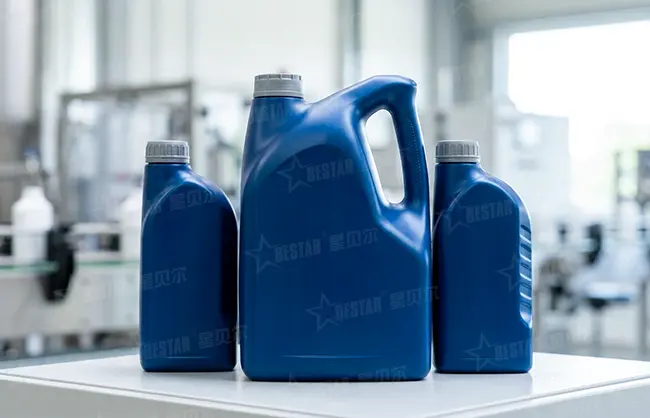
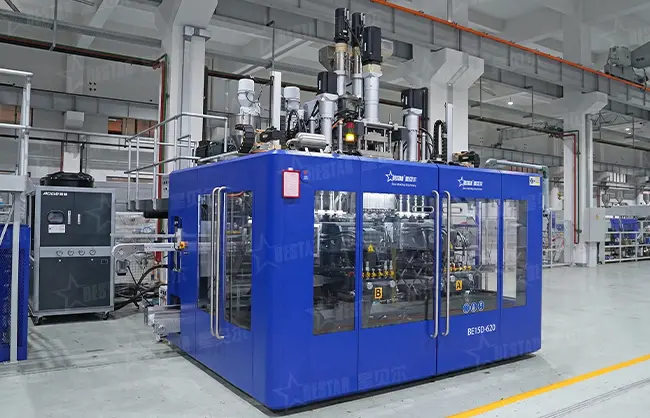
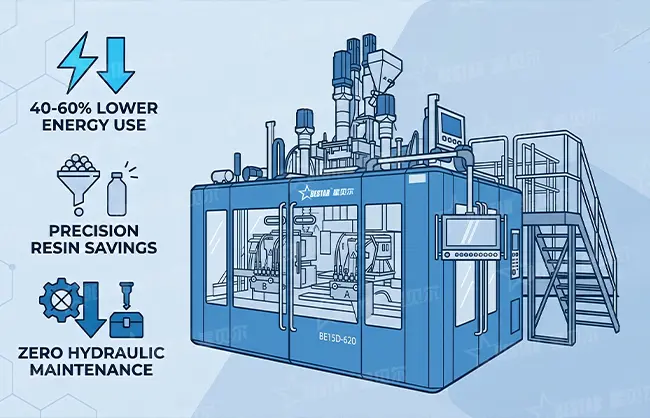
While blow molding is an excellent, cost-effective process for producing hollow plastic parts (like bottles, containers, and tanks), blow molding machine has several distinct disadvantages and limitations.
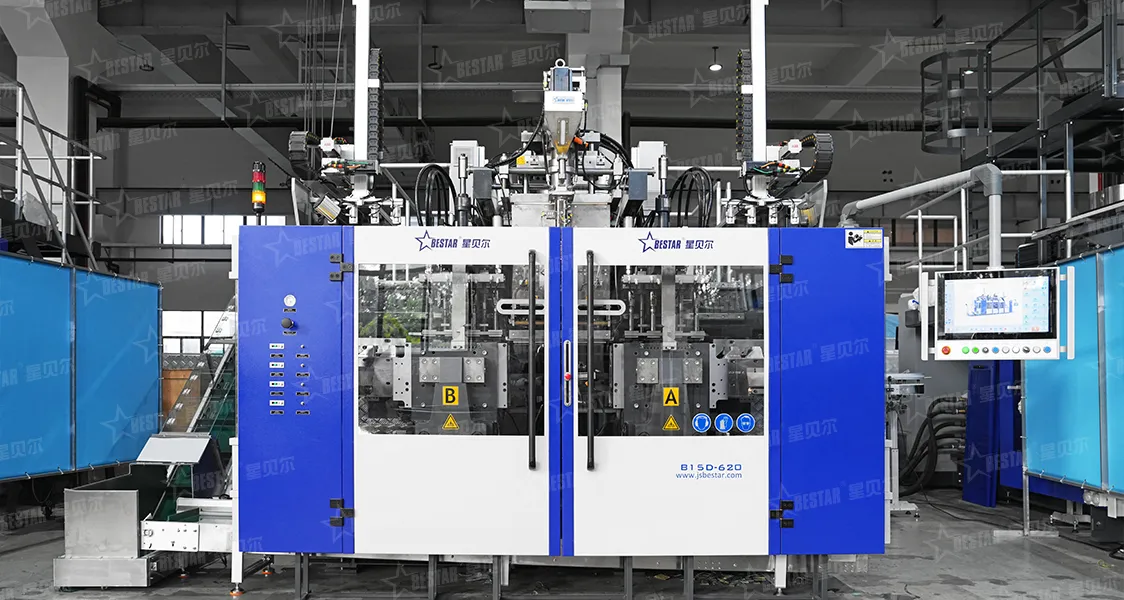
Key Disadvantages of Blow Molding:
1. Design Limitations
Hollow Parts Only: By definition, it can only produce hollow, single-piece items. Blow molding cannot create solid or complex multi-component parts directly.
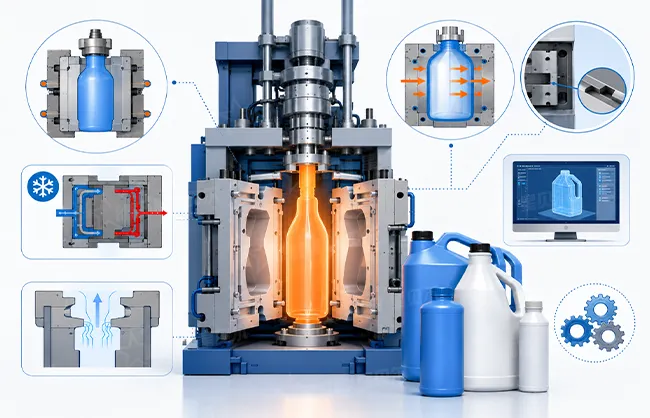
Uniform Wall Thickness is Difficult: Achieving consistent wall thickness is a major challenge. Areas that stretch more (like corners and sides) become thinner, while less stretched areas remain thicker. This can lead to weak spots.
Limited Geometric Complexity: Blow molding is less suited for parts with intricate undercuts, fine details, or sharp corners compared to injection molding. The parison (the hot tube of plastic) can’t always flow into complex molds perfectly.
2. Material and Property Limitations
Material Restrictions: Primarily limited to thermoplastics with good melt strength (e.g., HDPE, PET, PVC, PP). Plastic blow molding machine cannot process thermosets, metals, or composites easily.

Anisotropic Material Properties: The stretching and orientation of the polymer can lead to uneven mechanical properties. Strength is often higher in the direction of stretch.
Surface Finish Limitations: While good, the surface finish and clarity are generally inferior to that achievable by injection molding. “Pinch-off” lines (where the mold seals and cuts the parison) are always present and may require post-processing.
3. Production and Economic Drawbacks
High Tooling Cost for Complex Molds: While generally cheaper than injection molds for simple shapes, complex blow molds (especially with advanced cooling or multi-cavity designs) can be expensive.
Significant Scrap Generation (Trim Waste): The process generates “flash” or excess material at the top and bottom that must be trimmed off. This scrap (though often recycled) represents material waste and adds a secondary processing step.
Slower Cycle Times than Some Alternatives: For very high-volume, small items (like bottle caps), injection molding is often faster. Cooling the large, hollow part inside the mold can be time-consuming.
Secondary Operations Often Required: Most blow-molded parts require trimming, drilling, printing, or surface treatment, adding to production time and cost.
4. Quality and Precision Issues
Lower Dimensional Accuracy: Tolerances are not as tight as those achieved by injection molding or machining. Shrinkage and warpage can be harder to predict and control.
Potential for Defects: Several process-specific defects can occur:
Weak Seams: The pinch-off areas are inherent weak points.
Parison Sagging: The hot tube of plastic can stretch under its own weight before inflation, leading to uneven walls.
Poor Distribution: Inconsistent material distribution as mentioned above.
Air Pockets or Imperfect Blowing: Can lead to malformed parts.
About Suzhou Bestar Blow Molding Machinery Co., Ltd:
Beier Group and Bestar company are same owner And Bestar has been established for more than 19years. Bestar provides customers high efficiency, innovative, energy saving blow molding machinery solutions. Bestar blow molding machines sold to more than 60 countries.

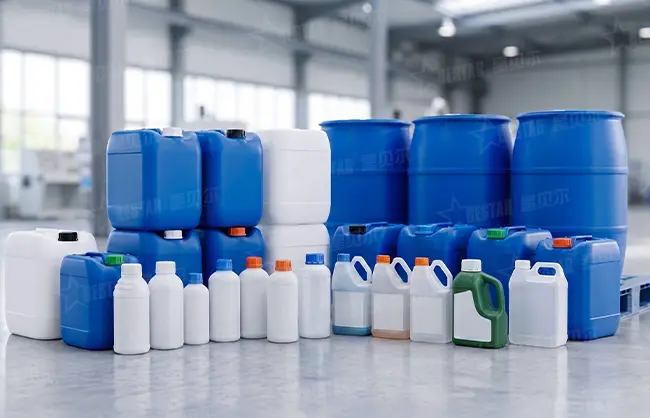
Series blow molding machine is used for blowing 100ml-1250L HDPE PE PP products like milk bottles, daily chemical packaging bottles, jerry cans, pesticide bottles / medicine bottles and stacking barrels.
Please write your machine inquire Email, Phone Number and Company Name here, we will respond within 12h. Or you can directly contact us: Email: sales@bestarmachinery.com or at Whatsapp/Wechat +86 18862609888.
Related News