How Are Pesticide Bottles Manufactured: Extrusion Blow Molding Process
2026-09-08
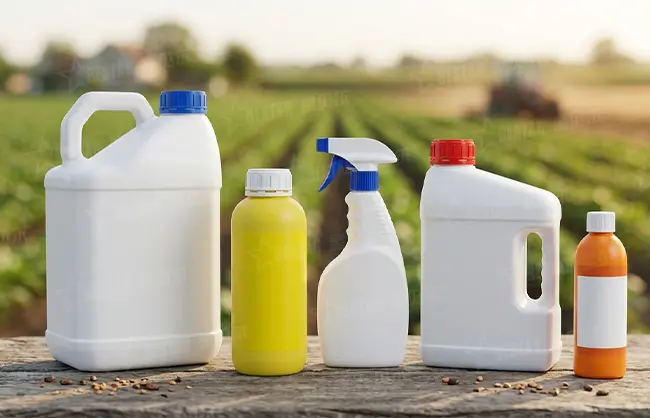
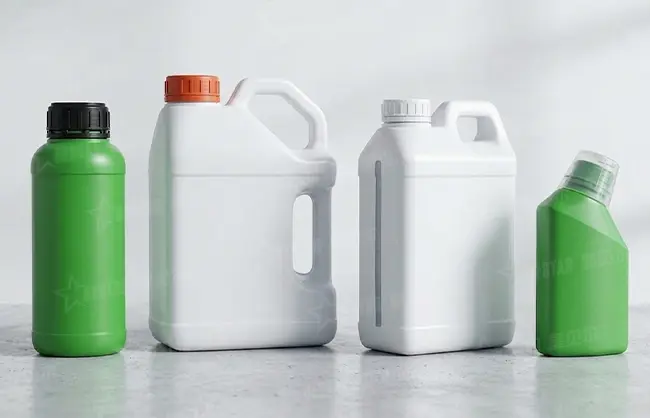
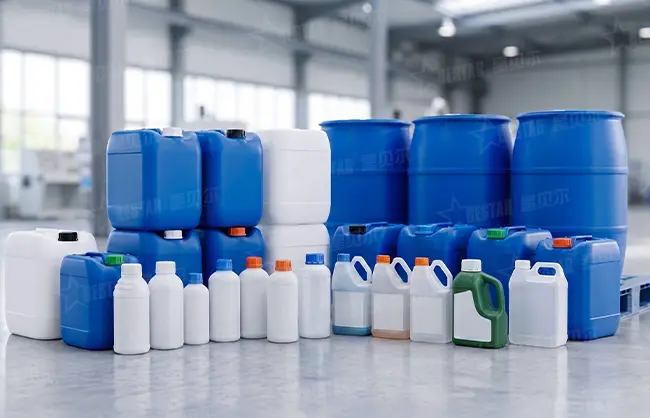
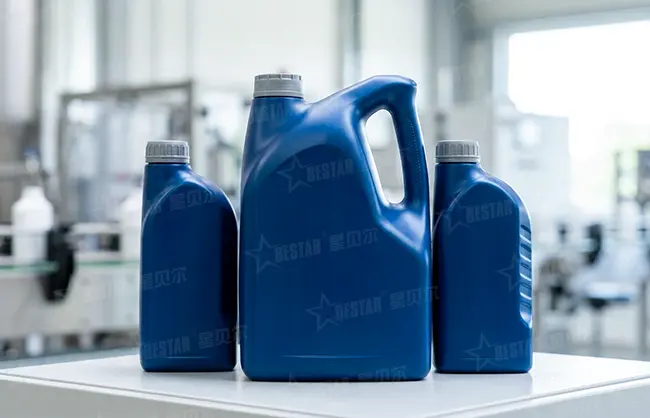
Agricultural chemicals demand a zero margin for error. Unlike standard water bottles or cosmetic containers, a pesticide bottle must endure harsh chemical compounds, extreme temperature fluctuations in the field, and rigorous transport conditions without degrading or leaking. Achieving this level of structural integrity relies on a highly specialized manufacturing method: the extrusion blow molding process.
For packaging engineers and agrochemical manufacturers, understanding the mechanics behind a pesticide bottle blow molding machine is critical. Let’s break down exactly how these heavy-duty containers go from raw plastic pellets to market-ready vessels.
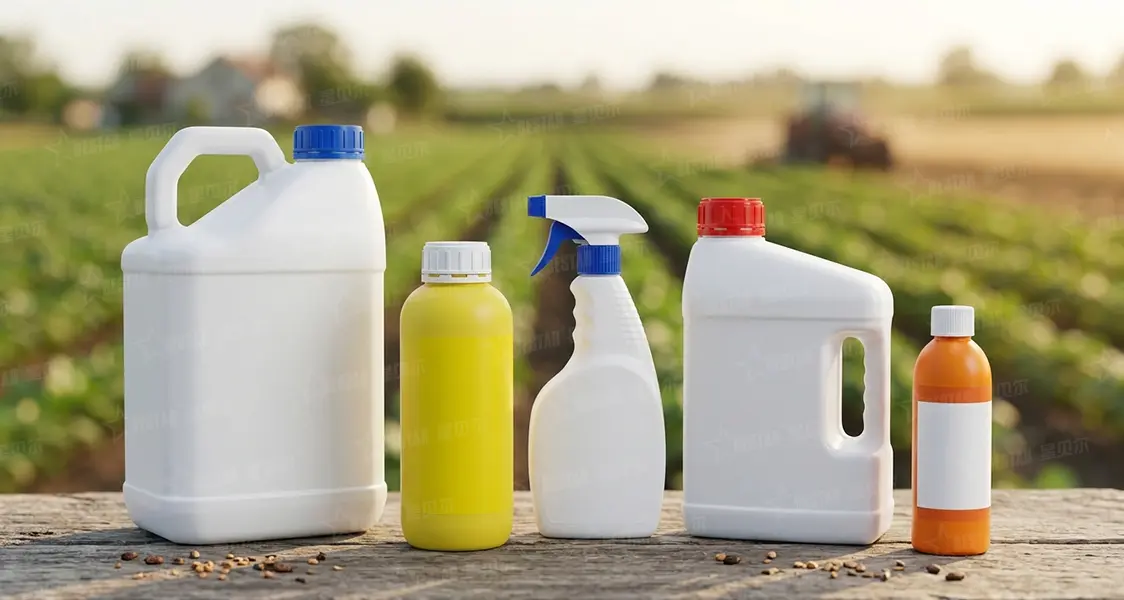
Foundation of Agrochemical Packaging:
Most agricultural containers are manufactured using High-Density Polyethylene (HDPE). HDPE is favored for its incredible tensile strength, impact resistance, and natural chemical inertness. However, handling volatile chemicals often requires more than just a single layer of plastic.
Most manufacturers frequently employ multi-layer co-extrusion. By sandwiching a specialized barrier material—like EVOH (Ethylene Vinyl Alcohol) or Nylon—between layers of HDPE, the bottle gains exceptional resistance to solvent permeation. This prevents the chemical fumes from escaping and keeps moisture out, extending the shelf life of the pesticide.
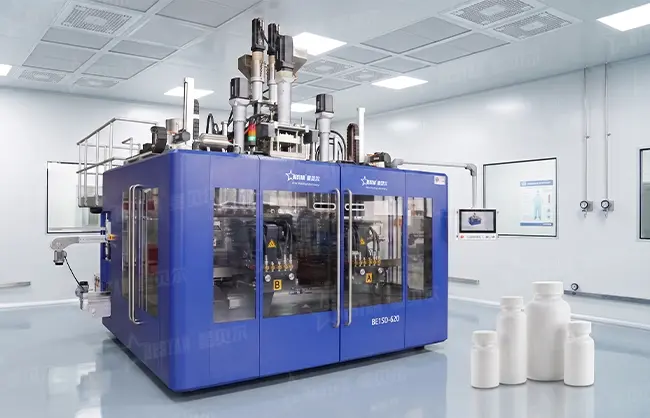
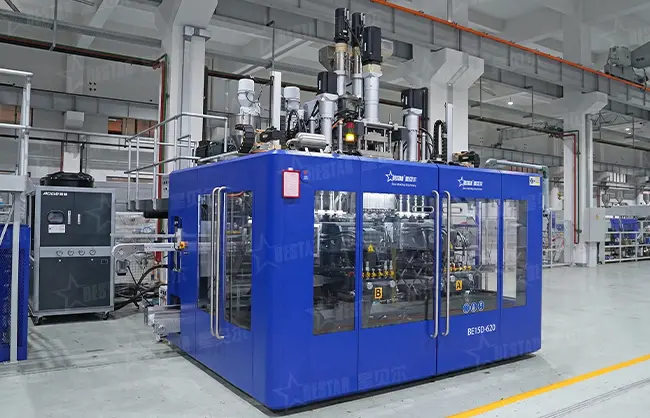
Inside the Bestar Extrusion Blow Molding Machine:
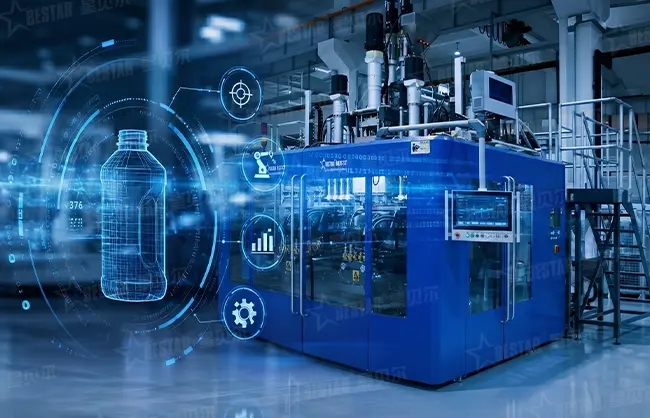
The creation of these resilient pesticide bottles happens in continuous, rapid cycles inside an extrusion blow molding machine. The process is a blend of thermodynamics, fluid dynamics, and precise mechanical timing.
Melting and Extrusion
The process kicks off in the extruder. Raw plastic resin pellets are fed into a heated barrel where a rotating screw melts them down into a molten, viscous liquid. The temperature control here is vital; if the resin is too cool, the bottle will have weak spots, and if it’s too hot, the plastic will degrade.
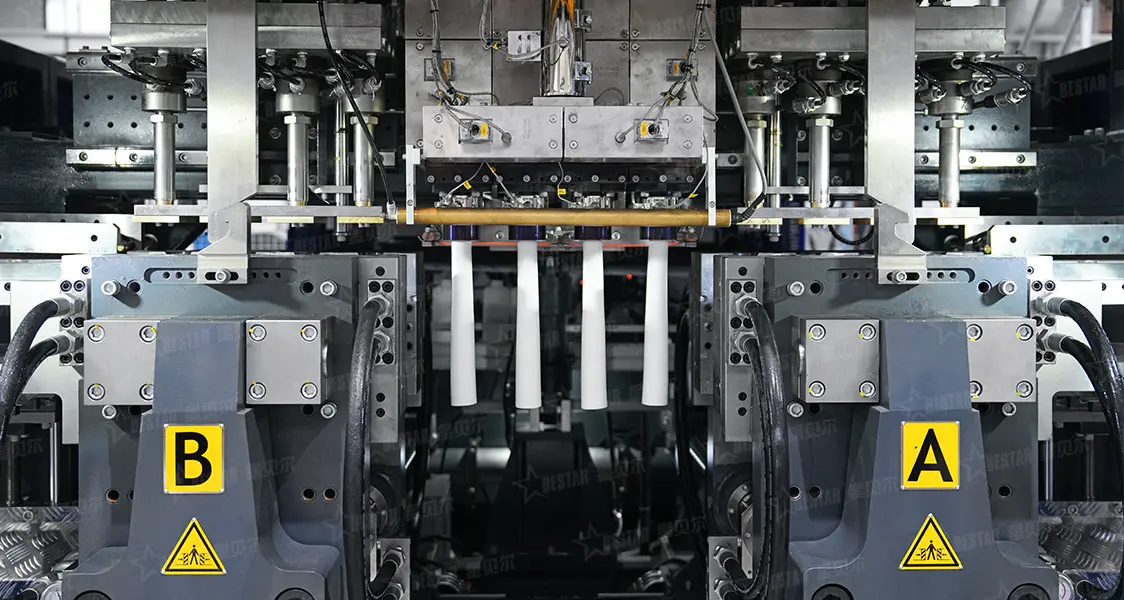
Forming the Parison
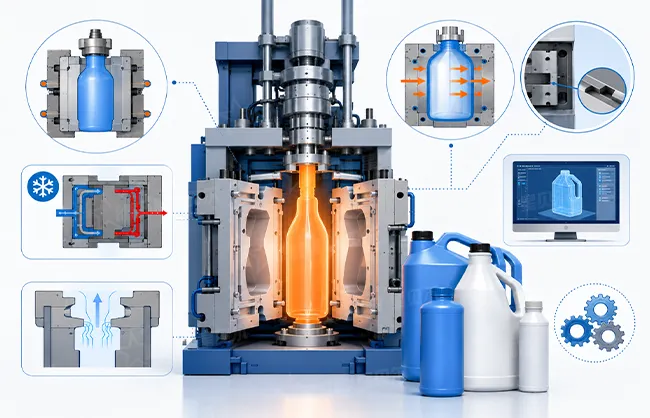
Once the plastic reaches the perfect consistency, it is forced through a circular die head. This creates a hollow, tube-like sleeve of molten plastic known as a parison. In high-volume production, a single machine might drop multiple parisons simultaneously to maximize output.
Clamping and Blowing
As the glowing parison descends, two halves of a chilled metal mold clamp shut around it, pinching the bottom closed. A blow pin is then inserted into the top of the tube. High-pressure compressed air blasts into the parison, forcing the flexible plastic outward until it aggressively conforms to the exact shape and textured details of the mold cavity.
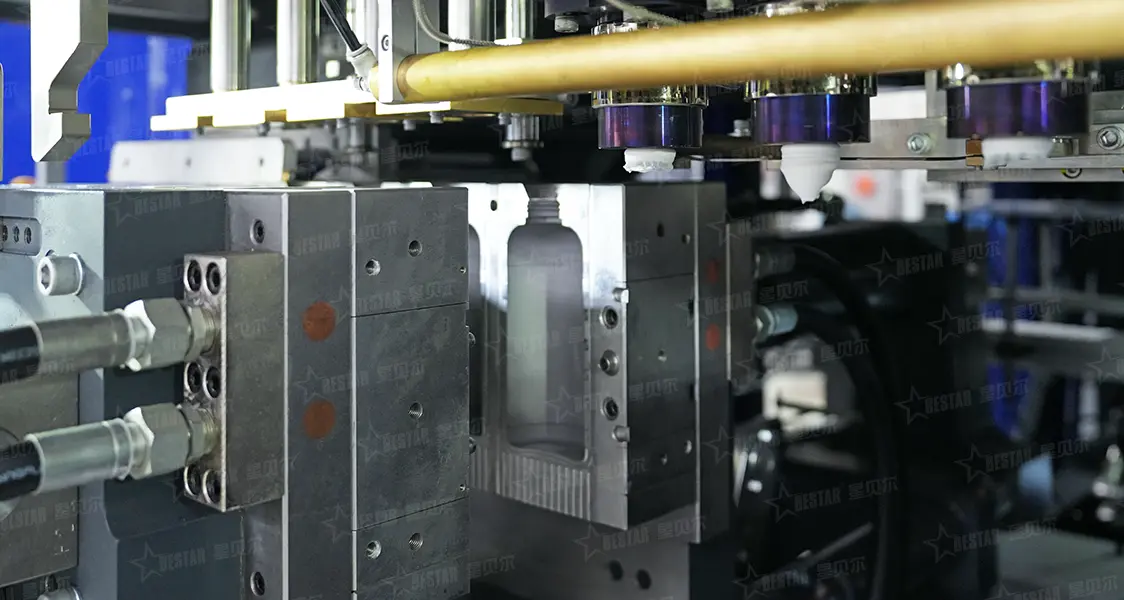
Cooling and Curing
Because the mold is chilled (usually by internal water channels), the plastic rapidly freezes upon contact. This quick cooling phase locks the polymer chains into place, ensuring the bottle retains its intended dimensions and structural strength without warping.
Deflashing and Leak Testing
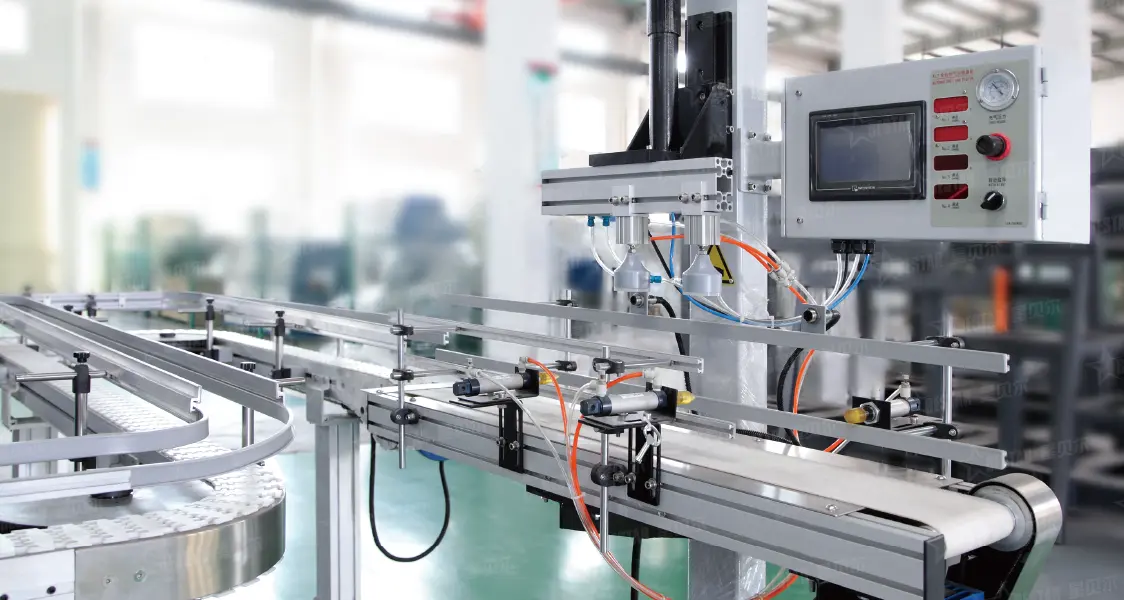
When the mold opens, the newly formed bottle is ejected. However, it isn’t quite finished. The clamping process leaves excess plastic—called “flash”—at the top and bottom seams. An automated deflashing system cleanly trims this waste away, which is then often recycled back into the production line to minimize material loss.
Choosing the Right Equipment for the Factory:
Pesticide bottle blowing machine must be robust enough to handle complex extrusions while offering absolute control over the production cycle.
Depending on a facility’s specific operational goals, typically choose between two blow molding machines architectures. To accommodate diverse manufacturing needs, Bestar Machinery offers both:
- Hydraulic Blow Molding Machine: The traditional industry workhorses. These machines are prized for their immense, unwavering clamping force and rugged reliability, making them ideal for molding heavy-duty, large-capacity agricultural chemical drums.
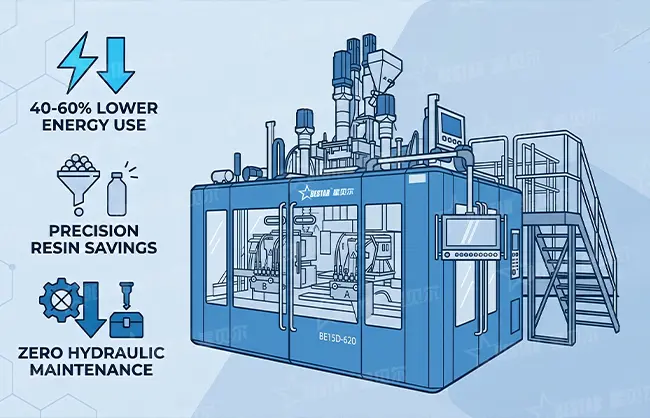
- All-Electric Blow Molding Machine: The cutting-edge choice for forward-thinking facilities. Driven by servo motors rather than hydraulic fluids, these machines offer surgical precision, drastically lower energy consumption, quieter operation, and a cleaner manufacturing environment (with zero risk of oil leaks).
Regardless of the drive system chosen, advanced parison controllers on these machines actively adjust the die head during extrusion. This ensures thicker plastic is extruded exactly where the bottle will stretch the most—like the neck and bottom corners—guaranteeing uniform wall thickness and eliminating weak points.
FAQ:
Q1: Why use HDPE for pesticide bottles?
A: HDPE offers exceptional chemical resistance and impact strength, preventing degradation from harsh agricultural solvents.
Q2: Hydraulic vs. all-electric blow molding machines?
A: Hydraulic models deliver massive clamping force for heavy-duty drums. All-electric models offer pinpoint precision, high energy efficiency, and a cleaner, oil-free workspace. Bestar Machinery provides both options.
Q3: Can the process create multi-layer bottles?
A: Yes. Co-extrusion machines feed multiple plastics into one die head, adding specialized inner barrier layers to safely block chemical fumes.
Q4: What happens to the trimmed plastic waste?
A: Trimmed “flash” is automatically ground up and fed directly back into the extruder, creating a highly efficient, near-zero-waste cycle.
Q5: How is uniform wall thickness controlled?
A: Parison programming automatically adjusts the die head during extrusion, proactively reinforcing high-stress areas like the bottle’s base and neck.
About Suzhou Bestar Blow Molding Machinery Co., Ltd:
Beier Group and Bestar company are same owner And Bestar has been established for more than 19years. Bestar provides customers high efficiency, innovative, energy saving blow molding machinery solutions. Bestar blow molding machines sold to more than 60 countries.

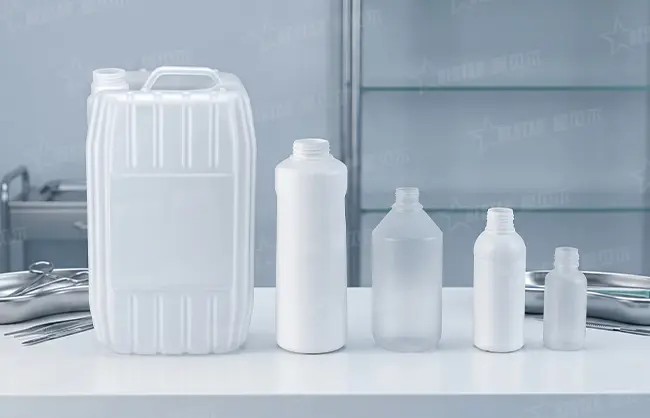
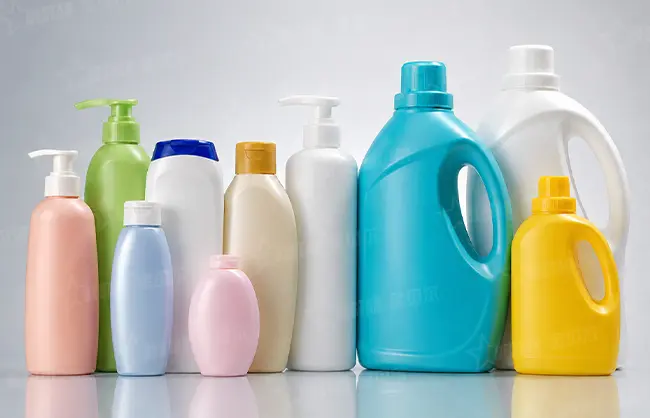
Series blow molding machine is used for blowing 100ml-1250L HDPE PE PP products like milk bottles, daily chemical packaging bottles, jerry cans, pesticide bottles / medicine bottles and stacking barrels.
Please write your machine inquire Email, Phone Number and Company Name here, we will respond within 12h. Or you can directly contact us: Email: sales@bestarmachinery.com or at Whatsapp/Wechat +86 18862609888.
Related News